
The Question
I am tempted to invest in one of the uprated alternators that are widely offered today, what are the downsides?
The Answer
There are mostly upsides to moving to an uprated alternator but how much work is involved rather depends on the car you intend to fit it on and what is originally fitted. Take any pre 1968 dynamo equipped MGA, B or Midget and fitting an alternator is not a quick and simple upgrade. To start with these cars are positive earth and unless the polarity of the car has been previously changed to negative earth that is one job that has to be done if you are fitting an alternator. The polarity conversion is a little more involved and it now a subject for this answer.
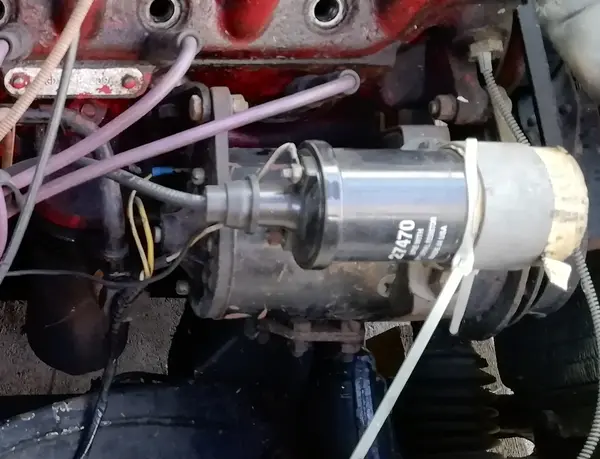 A dynamo fit on an MGA and note that the wiring to carry the generated output is pretty much the same size as the field wire.
The benefits of fitting an alternator to a previously dynamo equipped car are significant in respect to maximum power generation, but more importantly is the lower engine speed enhanced power generation of an alternator, especially the uprated offerings. This significant increase in power generation is mostly down to the low dynamo generation that may only deliver a maximum of 22 amps at higher engine rpms, or perhaps it may be an uprated one giving up around 28 amps at something over 2200 dynamo rpm.
This is why back in the days of these dynamo cars being daily transport you would often suffer drained batteries in winter following regular use driving in slow stop start traffic at night when it was raining with use of headlights, wipers and heater fan to simply see where you were going and for others to see you. So the engine spent much time running at idle or not far above meaning the dynamo wasn’t producing enough power to meet the demand and the extra demand had to be supplied by the battery.
Higher rated dynamos that delivered 25 to 28 amps were available, which doesn’t sound much better but 28 amps was over 25% better. However the first common alternators fitted to MGB and C, the 16AC at 34 amps then the common 16ACR or 17ACR with 36 to 38 amp outputs offered up to a 72% increase, and importantly the alternator generated more power at lower rpms.
Late MGBs were better off as they moved onto the 18ACR that delivered around 42amps and today it is quite common to see a selection of uprated alternators from various manufacturers with 55 to 75amp output fitted and working well. If going from an original 17ACR to a 55 amp alternative then it is usually acceptable to simply plug and play, with one of these uprated versions. However, this plug and play assumption is always subject to a careful check of the cars wiring condition that after so many decades can have a range of age related and former owner problems!
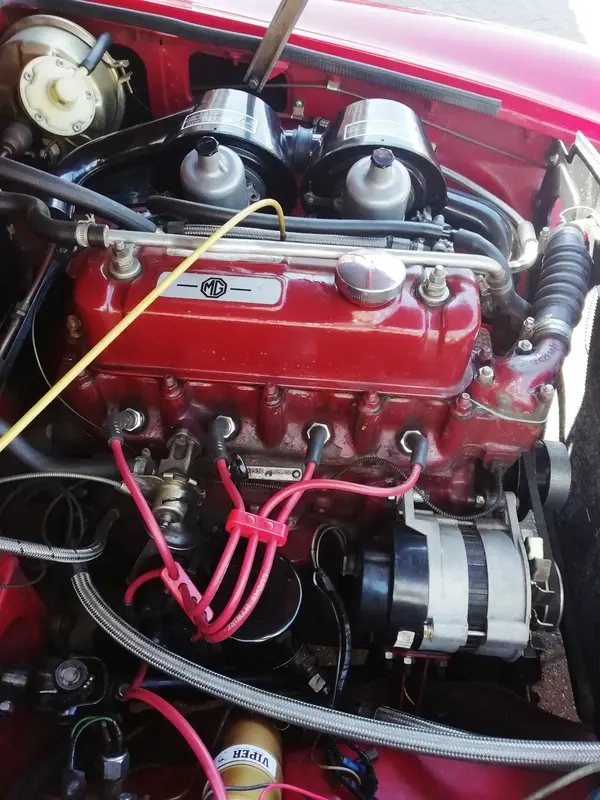 A standard early 1970’s MGB with an uprated 55 amp 17ACR alternator (GEU216), visually identical to the lower rated standard units.
Note that not all alternator fitments came with the standard DIN three pin plugs (two large spades and one small, laid out in the pattern LLs), the early cars with the 16AC series and some 1970’s cars that had the battery sensed alternators where the plug terminals were sLs. Conversion of these battery sensed types to the common DIN format is simple with a terminal kit GEU250, and with a little more wiring alterations swapping AC to an ACR isn’t too difficult either.
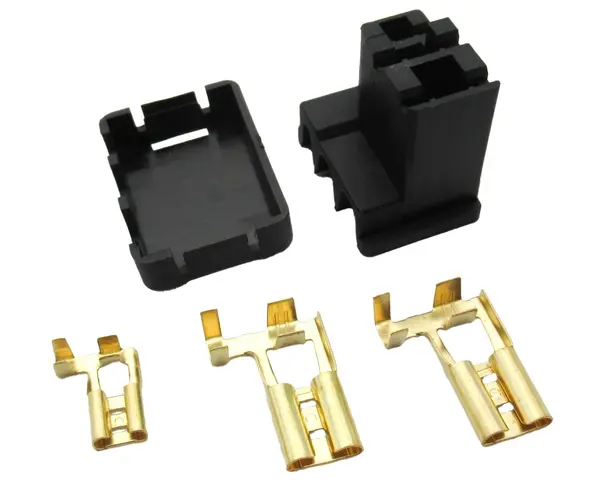 GEU250 - Alternator Terminal Kit
Early cars using a dynamo can also be upgraded to an alternator, although a prerequisite is the cars polarity has to be converted to negative earth if still positive. Some more wiring conversion is required and a special ‘swan neck’ alternator rear mounting bracket (ALT1) will be required on many engines as the dynamo is much longer than an alternator and earlier blocks only had mounting bosses for the longer dynamo.
For MGB V8’s an alternator conversion from the factory AC Delco unit shows that an ACR alternator is too long to fit in front of the rocker cover on a standard factory format MGB V8 (factory or conversion cars), but the later Lucas A127 series does fit and work well as both my V8’s have now nearly 40 years reliable service in this format. MGOC Spares does a 70amp alternator with fan and a single Vee type belt (most today are multi Vee belts) ready to bolt on under GEU218X.
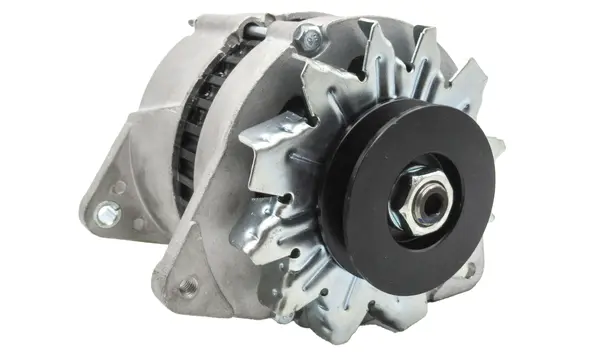 GEU218X - MGBV8 70amp Alternator from Q Parts
Lastly on any alternator conversion it is vital to ensure that the alternator pulley lines up very accurately with the water pump and crank pulleys otherwise the belt will wear and fail quickly or jump off. Small misalignment is not unusual and need spacer washers on the alternator to bracket fitting to correct, or in some cases there may be a need for a spacer fitted under the alternators pulley wheel where you source an alternator from another car.
Today there has been huge development in alternator performance to specifically serve the classic MG community with higher output 17ACR pattern alternators that are driven by the single Vee belt, rather than today’s standard multi Vee belt. The original 16ACR and 17ACR alternators are of their age and whilst generally reliable their performance is limited, but today MGOC Spares can supply brand new 17ACR pattern alternators with a much stronger 55amp output, with proportionally increased generation at lower rpms. (GEU216) The benefit for many MGBs and Midgets is that as this pattern of alternator was the standard fit on these cars it means that fitting one of these new versions is a straight forward quick and simple change.
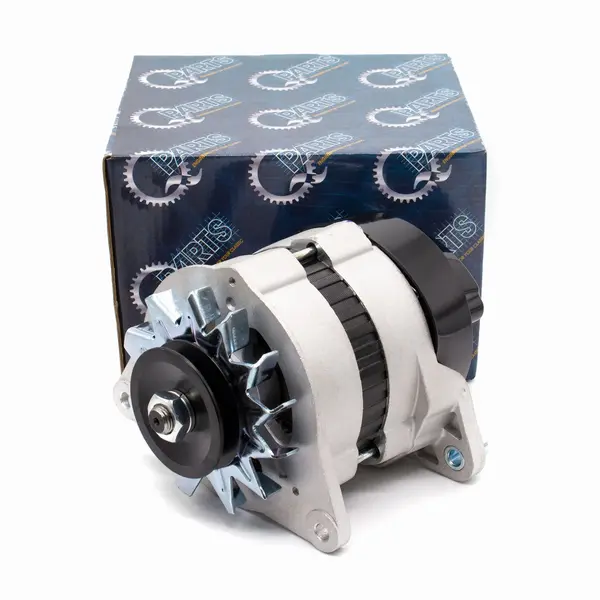 GEU216 - 16/17ACR 55amp Alternator from Q Parts
When looking beyond the ‘off the shelf’ offering from MGOC Spares the focus of attention for alternative alternators was often from Rover Group cars of the 1980’s and into the ‘90’s that deliver between 40 and 70 amps and as most come with what is known as the standard European three pin DIN plug (one small terminal next to two large spades that are connected internally) means swapping is very simple. (However, for a couple of years in the mid 1970’s the connection was to the BSH format, which is one big spade straddled by two smaller ones, and this wasn’t the only variations, but others were rare, but before committing to a replacement do check your wiring plug!)
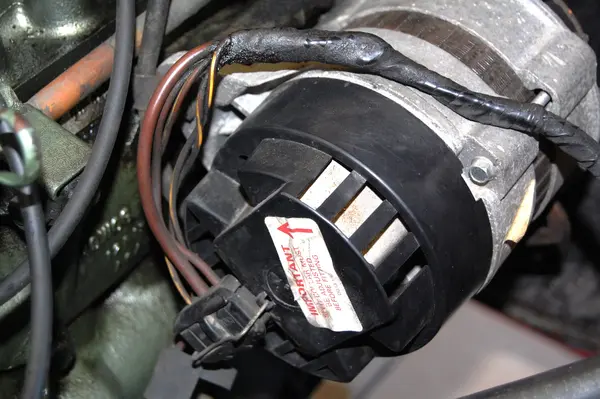 The rear view of an ACR type alternator with BSH termination and here the thickness of the brown output wire is noticeably bigger than the other to cater for an enhanced output.
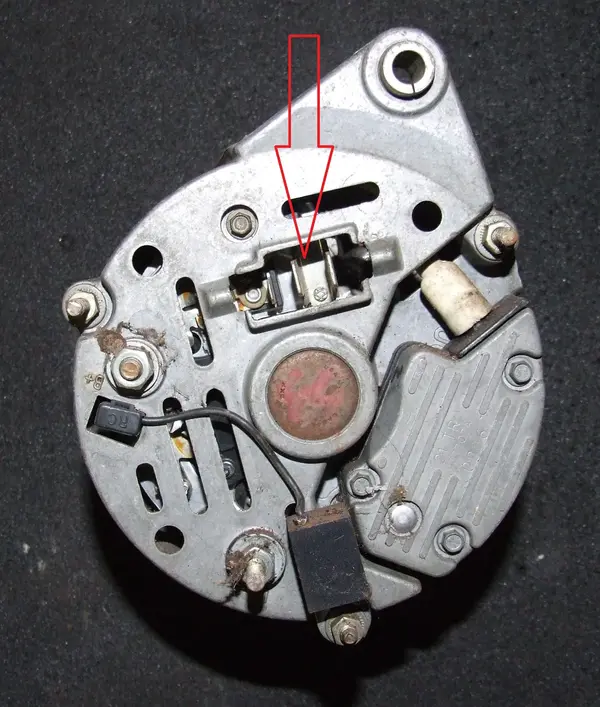 The rear of an A127 alternator showing this has the European three pin DIN configuration plug arrowed.
So far the above are all ‘ups’ but there are some potential downsides. The first consideration is in the ability of the output wiring connecting to the new alternator to offer a safe and reliable connection to the car. To start with consider a dynamo to alternator conversion and has the original dynamo control box been left in circuit, now just as a junction box with the original wiring just cross connected to eliminate the regulator function but maintain connectivity within the cars wiring.
At this juncture it is worth making the point that the alternator doesn’t just kick out maximum power for the rpm it is rotating at, but it is responsive to the actual electrical demand within the car. So when starting with a fully charged battery and low level loads commensurate with daytime driving in good weather then the electrical demands will be low once the surge demand from what the starter has drawn has been covered, and then the alternator will simply respond with an appropriate level of generation to cater for the demand.
However, start with a significantly discharged battery and have many more electrical items switched on and the demand is much higher and the alternator will simply respond by supplying that demand up to its maximum generating ceiling. The issue to consider here is the condition and rating of the cars wiring between the alternator and the starter solenoid connection, (the common distribution point for all electrical loads to the car and battery). Specifically in its ability to carry the full load from the alternator, when operating conditions were to demand heavy power generation for an extended time period. That is when weaknesses in the wiring can show up - and cooking wiring is always a very bad thing!
More connections in the charging circuit wiring and passing more amps through them is usually a recipe for heat generation, so I would always suggest that when fitting a new and higher rated alternator that the output wiring from the alternators three pin DIN connection be renewed with suitably robust cable and double up that output wire to use both spade terminals in the alternator and route both new cables and attach to the starter solenoid battery connection to take the full load safely and more efficiently. Correctly crimped connections are very important and ideally use brown wire that then makes this look standard.
V8’s came with a Delco 45amp alternator as standard, but you can’t fit a Lucas ACR pattern alternator because the alternator mounting position is directly in front of the right hand cylinder head and rocker cover, and the ACR body is too long. This is why MG chose the Delco in the first place, but a common more modern alternator such as the Lucas (later Magneti Marelli) A127 series fits the space and is a plug and play fit. These were fitted to many Austin, MG and Rover cars (including the RV8) from the mid 1980's to mid ‘90’s, but not to be confused with the even more modern common cross referenced A127 that has an internal fan and multi Vee belt operation. The useful aspect of these older traditional external fan A127 series is that they can be had in single Vee belt format, as well as multi Vee belt operation and converting it to a single Vee belt is a simple bolt on the single Vee pulley.
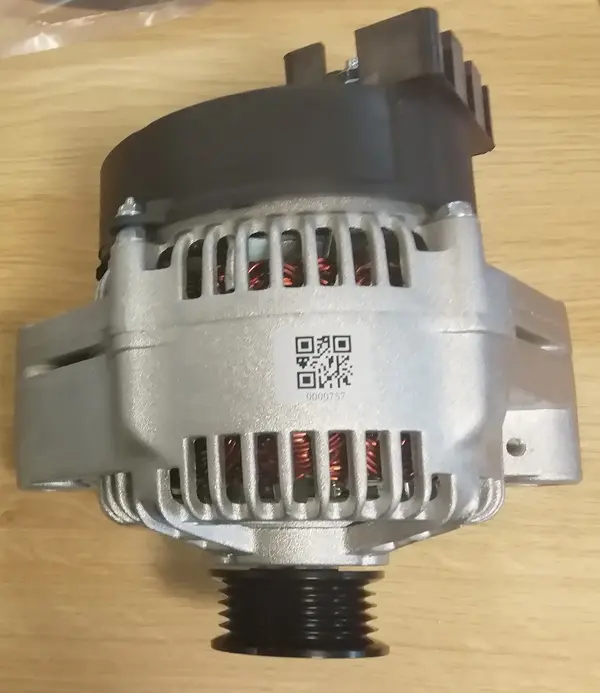 An MGF alternator to illustrate the internal fan design and use of the multi vee belt.
The A127 series was available in 45 amp formats on Metro and Maestro, 55 amp on upper range Metro, Maestro and Montego models plus a huge number of 1990’s Rovers with up to 65 amp output for the top range cars. Using one of these A127 series alternators on MGs other than the V8 is perfectly feasible, but with the economic availability of brand new 55amp uprated 17ACR type alternators makes this choice less obvious today.
Using a 45 amp version needs no wiring upgrade; just original wiring in good order and the 55 amp version needs to follow the same checking route as the 55 amp 17ACR upgrade, but it is better to double the original rated wiring. The 65 amp A127 alternators usually have just a single large threaded stud and nut output connection for a single much heavier brown wire with ring terminal output and a smaller one for the smaller brown/yellow ignition warning light connection. This immediately means the cars wiring needs to be converted from the European 3 pin DIN connector to these individual connections using the appropriate new much heavier duty single cable to the starter solenoid is the best solution.
Please Note: The information provided in this blog is intended as a general guide only. While we aim to ensure accuracy, classic vehicles can vary, and procedures may differ depending on model and condition. Always consult your vehicle’s official workshop manual before carrying out any work. If in doubt, seek the services of a qualified professional.
© 2025 MGOC Spares Ltd. All rights reserved.
This blog and its contents are the intellectual property of MGOC Spares Ltd and may not be copied, reproduced, or republished without prior written permission.
For author enquiries, corrections, or reproduction requests, please contact: blog@mgocspares.co.uk
Meet Roger Parker – our MG “Tech Guru” with a lifetime of passion for all things MG!
From his early experiences with MGs, to a career as a traffic officer developing ANPR systems, advising MG Rover and then as a technical advisor & writer at the MG Owners’ Club – Roger has worked on hundreds of MGs. Now, in “retirement,” he shares his unrivalled knowledge with us at MGOC Spares.
His blogs (exclusive & free!) are packed with expertise you won’t find anywhere else.
View more here
Who are MGOC Spares?
At MGOC Spares, we provide dedicated parts and accessories for classic MG vehicles, including the MGB, Midget, MGC and many more.
With thousands of products in stock, we are your one-stop shop for all your classic car needs. Our wealth of expertise means that you can trust us to find the right part for your classic MG vehicle – whatever it may be.
Need support finding the right parts for your MG? Contact us today, we're happy to help!