 The Question
I have read quite a lot of conflicting information regarding the compatibility of the factory V8 with regard to the use with unleaded fuel. Is it necessary to use Valvemaster fuel additive or a similar product in the V8 engine to combat valve seat recession?
The Answer
A simple question which doesn’t have such a simple answer and has become more complex in the last decade or so...
In 1987 when unleaded was starting to appear in the UK, I was a regular visitor to Land Rover at Lode Lane, Solihull, in respect to other vehicle development projects that I was involved with. The arrival of unleaded was starting to generate a number of compatibility questions for various MGs and knowing that many of the Range Rovers on the fleet I had been using for many years had unleaded compatibility, but conversely the last Rover 3500 SD1’s on the fleet didn’t have Austin Rover approval raised the simple question, ‘Why not?’ Additionally, to add further confusion, I also knew that the emergency services V8 Sherpa vans did have Freight Rover approval to use unleaded.
All Rover V8 engines came from the same Acocks Green, Birmingham engine factory that was under the control and responsibility of Land Rover. So why were there different approvals from different parts of the same overall car company? This was a typical mixed up, British Leyland confused public face giving the indication that the left and right hands didn’t know what the other was doing, which had carried on into the Austin Rover and Rover period.
So, on one of my regular visits to Land Rover I asked the Land Rover Engineering Dept. what their engineering perspective was on the physical standard of the V8 and unleaded fuel. It took a little while for them to check all the appropriate records to cater for most of the engines from the vehicles I asked about, but their clear and unequivocal base answer was that all of the V8 engine production from October 1970 used materials that were unleaded tolerant. The pertinence of that date related to the launch of the Range Rover that was intended for world markets, where unleaded was the more common fuel.
They went further and looked into the official tunes of a number of the common V8 cars and advised whether other changes may be needed. Starting with the MGB GT V8, they confirmed the engine was tuned to run with minimum 94RON fuel with its 8.25 to 1 compression ratio, so no other changes were needed to simply refill with 95RON or higher petrol. The same applied to V8’s that were made after the October 1970 date that were using the common 8.13 to 1 and 8.25 to 1 compression ratios (Mainly Land Rover and Freight Rover vehicles). However, engines with higher compressions and typically the Rover SD1 saloons with 9.35 to 1 compressions, or the Vitesse with 9.75 to 1 would usually run with greater standard ignition advance and were set to run with 97RON or higher fuels so would need two to three degrees reduction in the ignition timing from the official setting.
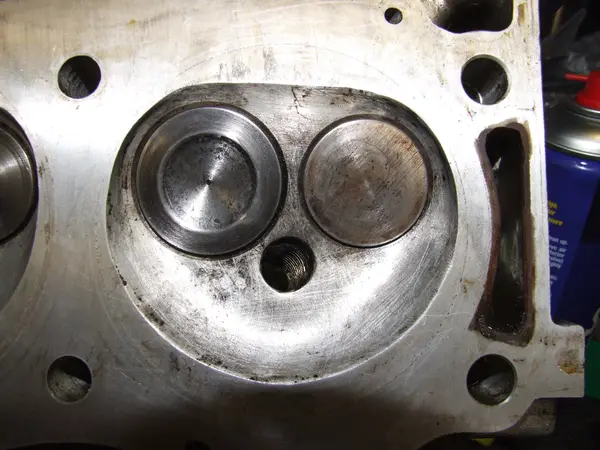 SD1 V8 cylinder head combustion chamber
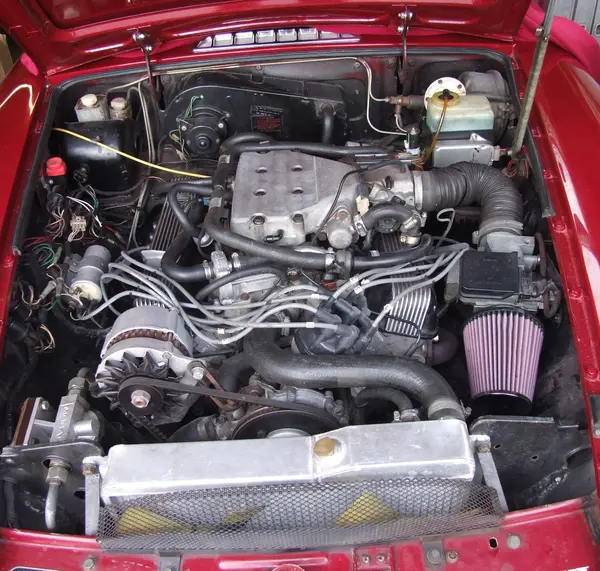 Image of early P5B V8 engine with SD1 heads and Lucas AFM Injection in an MGB
Since it's been over thirty years since I made these enquiries and over fifty years since the Range Rover was first introduced, there have been many subsequent additional changes and further upgrades to materials used. These upgraded material specs can provide even better resistance than the materials used from 1970, but many owners still chose a belt and braces approach and also use an additive such as Classic Valvemaster as this will only add to the protection and doesn’t have any negative aspect.
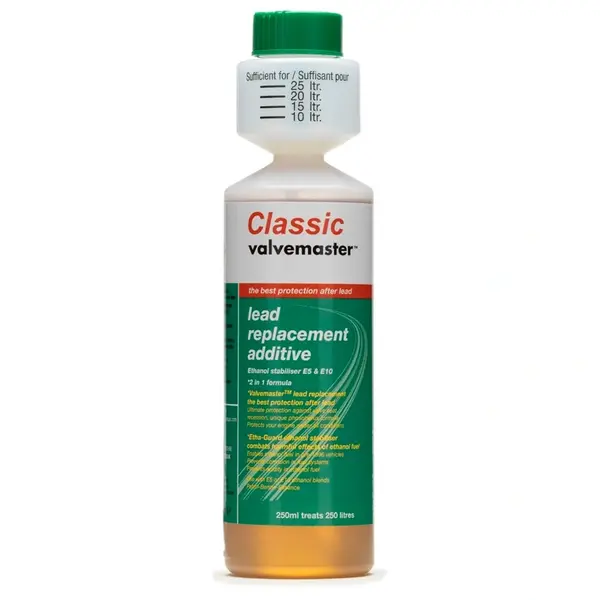 1768 - Classic Valvemaster Lead Replacement Additive 250ml
However, the unleaded aspect has been overtaken in the last fifteen years by the negative Ethanol aspects that have created a much bigger problem than unleaded, and a genuine threat to a number of areas within the cars fuel system. Ethanol creates several issues for a classic car and looking at the factory V8s made in the 1970’s, as well as other similar age MGs means that the primary issue will be the degradation of fuel hoses from the inside that then causes fuel leaks. Sometimes very significant leaks, and no fuel leak is safe!
Therefore, I have to advise that where older fuel hoses are still in place that they all be replaced with new hoses that are confirmed as being compatible with ethanol to at least 10% volume in pump petrol, such as those available from MGOC Spares. Other rubber parts such as the fuel tank sender seal and some small internal carb rubber seals will also in time suffer. Specifically for the HIF carbs the fuel enrichment (choke by its common name) device within the HIF carbs may suffer external fuel leaks, but also may suffer internal carb leaking making the mixture richer and possibly uncontrollably richer.
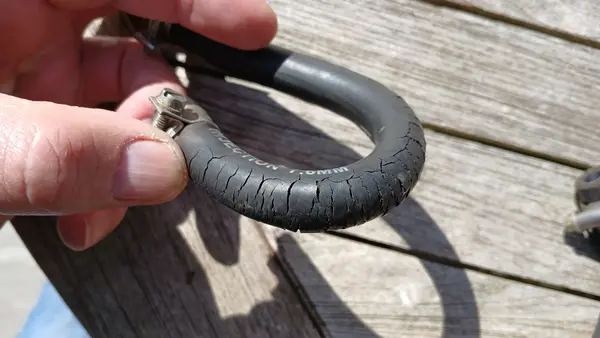 This fuel hose was sold as ethanol resistant but within three few years of light use had failed due to the degrading effects of ethanol causing the hose to break up.
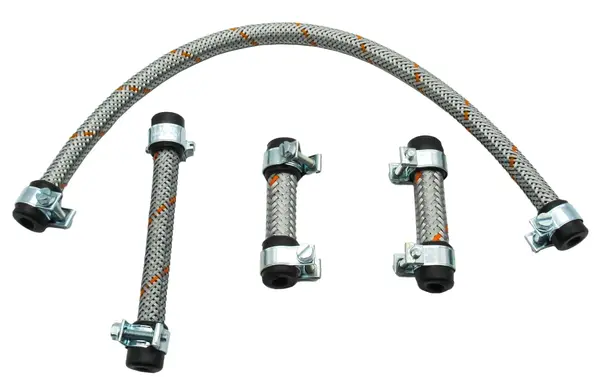 FLK3 - Braided Fuel Hose Kit MGB HIF
The bigger issue today is not the engines ability to reliably burn modern fuel with ethanol without any valve seat recession, but getting the fuel to the engine without leaks and then keeping the correct mixture. Today’s Classic Valvemaster Plus offers the continuing valve seat protection but also contains the very considerable advantage of Etha-Guard which protects the fuel system from the negative aspects of ethanol’s desire to draw water vapour from the atmosphere. Over time, especially during over wintering, to see liquid water being deposited into the bottom of the fuel tank where it can cause corrosion to the steel tank as well as in steel fuel lines. Liquid water in fuel can also cause significantly poorer running in low volumes or stop the engine from running when higher volumes collect.
With so many V8 engines having confirmed unleaded approval there isn’t the need for an unleaded additive, but there certainly is a need to try and reduce the negative aspects of having ethanol in today’s fuel. If your car doesn’t have an exhaust catalyst you can of course use Classic Valvemaster Plus to add to the valve seat protection, but the benefit comes more from the Etha-Guard. However, if your car has exhaust catalysts, such as an MG RV8, then DO NOT USE Classic Valvemaster Plus, but consider the use of the separate Classic Etha-Guard additive which will provide the same protection against the negative effects of ethanol.
For more information about the effects of ethanol blended fuel, check out our blog post - Using Ethanol Blended Fuel in your Classic Car.
Looking for more MGB parts? View our full range HERE.
Please Note: The information provided in this blog is intended as a general guide only. While we aim to ensure accuracy, classic vehicles can vary, and procedures may differ depending on model and condition. Always consult your vehicle’s official workshop manual before carrying out any work. If in doubt, seek the services of a qualified professional.
© 2025 MGOC Spares Ltd. All rights reserved.
This blog and its contents are the intellectual property of MGOC Spares Ltd and may not be copied, reproduced, or republished without prior written permission.
For author enquiries, corrections, or reproduction requests, please contact: blog@mgocspares.co.uk
Meet Roger Parker – our MG “Tech Guru” with a lifetime of passion for all things MG!
From his early experiences with MGs, to a career as a traffic officer developing ANPR systems, advising MG Rover and then as a technical advisor & writer at the MG Owners’ Club – Roger has worked on hundreds of MGs. Now, in “retirement,” he shares his unrivalled knowledge with us at MGOC Spares.
His blogs (exclusive & free!) are packed with expertise you won’t find anywhere else.
View more here
Who are MGOC Spares?
At MGOC Spares, we provide dedicated parts and accessories for classic MG vehicles, including the MGB, Midget, MGC and many more.
With thousands of products in stock, we are your one-stop shop for all your classic car needs. Our wealth of expertise means that you can trust us to find the right part for your classic MG vehicle – whatever it may be.
Need support finding the right parts for your MG?